Sidewalk Repair in the Bay Area Rainy Season: Can the Notice Clock Wait for the Weather?
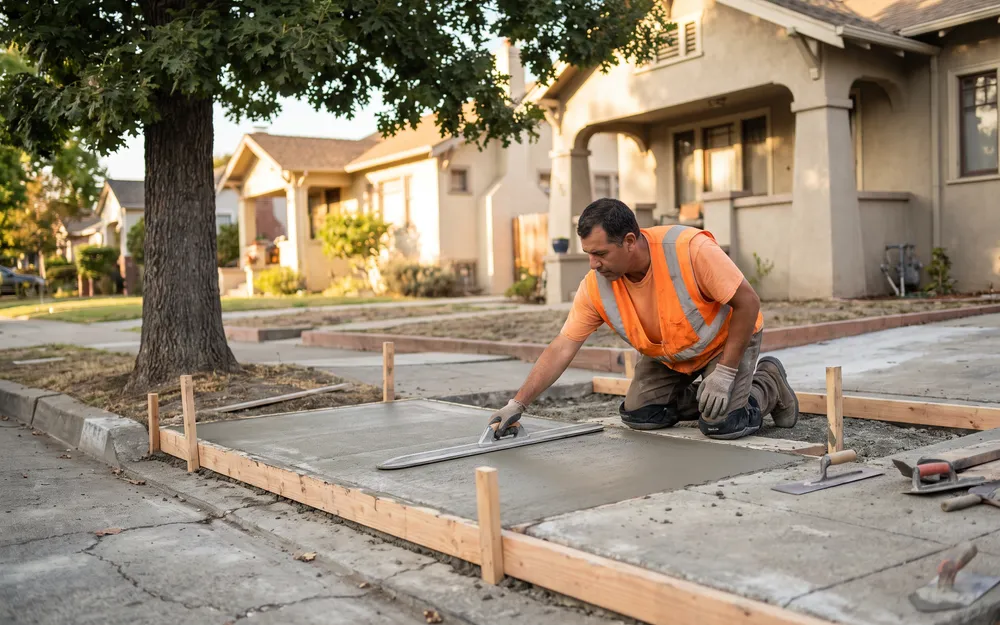
The Bay Area rainy season runs from November through March. San Francisco's 30 day SIRP clock and Oakland's 30 day Notice to Repair clock do not pause for it. A wet or soft base must dry out and firm up before a pour can happen. So the smart move when a notice lands in the wet months is to file the permit that same week. Do not wait for a dry day. It may not come for weeks.
BA Sidewalk Restoration works in Oakland, San Francisco, Berkeley, San Leandro, Hayward, and Fremont. This timing problem shows up on both sides of the bay every winter.
When does the Bay Area's rainy season actually start?
The National Park Service's own San Francisco weather page says it plainly. The rainy season usually runs from November to March. Rain is unlikely between April and October. That leaves most of the year as a real dry window for sidewalk work.
The wettest part of that window is even smaller. NOAA's 1991 to 2020 weather records show December as the wettest month in both cities. Oakland gets 3.85 inches that month. San Francisco gets 4.76 inches. January and February are close behind. A notice that arrives in September or October still has a dry stretch ahead of it. A notice that arrives in December lands in the hardest month of the year to get the ground ready.
Why a wet base holds up a sidewalk pour
Rain falling on fresh concrete is not the real problem. What is under the concrete matters more. NRMCA, the National Ready Mixed Concrete Association, writes the guidance crews use for finishing flatwork. Their rule is simple: the ground under the concrete must be evenly moist, with no standing water and no soft spots, before the pour goes in.
After a few weeks of Bay Area rain, the top of the ground can look dry. But it can still be soft or soaked a few inches down. That ground has to drain. It has to firm up. Soft spots may need to be dug out and rebuilt. That step is what actually slows a rainy season job down. It is not a few drops of rain during the pour itself.
Does San Francisco's SIRP 30 day clock pause for rain?
No. San Francisco Public Works runs sidewalk repair through its Sidewalk Inspection and Repair Program, called SIRP. Their rule states that work must start within 30 days of the Notice to Repair date. The rule does not list a weather exception.
So the clock on a San Francisco notice starts the day it is dated. It does not matter if that day is sunny or soaked. The permit still has to go in fast. The ground can take longer to get ready. The clock will not wait for it.
Get your frontage measured and the permit started now. Do not let the clock and the weather work against you at the same time.
Does Oakland's Notice to Repair clock pause for rain?
No. Oakland's own numbers make the timing even tighter. The City of Oakland's sidewalk page says a Notice to Repair gives the owner 30 days. The typical permit fee runs about $433 for under 200 square feet, plus about $0.93 for each square foot after that. The fee is only waived when a City tree caused the damage.
Thirty days is thirty days, rain or no rain. An Oakland owner notified in November, December, or January works the same calendar clock as an owner notified in June. The only difference is a harder, wetter base to deal with underneath it.
How to use the dry window before the rain starts
The months between April and October are the real planning window. A frontage that already shows cracks or lifted panels does not need to wait for a City notice. It can be measured and scheduled now. Getting ahead of the rainy season means the demolition, base repair, and pour can all happen while the ground is easy to work. That beats racing a 30 day clock against a soaked base in January.
Owner Danny Williams has worked in concrete and flooring for 31 years. He measures every frontage himself before pricing it. BA Sidewalk Restoration opened in 2026. Its concrete work carries a Lifetime Workmanship Warranty. Our sidewalk repair service covers the saw cutting, base rebuild, and pour, matched to the panels next to it.
If a notice already arrived, what a Notice to Repair actually requires covers the next step. If the question is cost, typical permit fees and repair costs covers that side. If a tree root caused the damage, that changes who pays. Tree roots lifting sidewalk, who pays is worth reading before the rain makes the cause harder to see.
Do not wait on a forecast to start your own clock. Call (510) 314-9236 and get the frontage measured while the ground still cooperates.
Talk to BA Sidewalk Restoration
Questions about your concrete job? We serve Oakland and the surrounding area with honest, upfront advice.
Get a Free Sidewalk Assessment
Related articles
FAQ
Related questions
Can concrete be poured in the rain?
Rain falling is not the main problem. The ground under the concrete is. NRMCA's guidance for finishing flatwork says the ground must be evenly moist, with no standing water and no soft spots, before the pour. After weeks of rain, getting the ground to that state is the real holdup. It is not drops landing on fresh concrete.
What makes a sidewalk base actually ready to pour after a string of rainy days?
No standing water. No soft spots under the panel. That is the NRMCA standard a crew checks the ground against. Ground can look dry on top and still be soft a few inches down after a wet month. So a crew checks by feel and by eye, not by whether it rained yesterday.
Does rain extend a sidewalk repair permit deadline in Oakland or San Francisco?
No. Neither city's own page lists a weather extension. San Francisco Public Works says work must start within 30 days of the Notice to Repair date. Oakland's notice also gives 30 days. Both clocks run on the calendar. A wet forecast is not a reason to wait before filing the permit.
Why is December the hardest month for Bay Area sidewalk work?
NOAA's 1991 to 2020 weather records show December as the wettest month in both cities. Oakland averages 3.85 inches that month. San Francisco averages 4.76 inches. A notice that lands in December lands in the month with the least dry ground. That is exactly when filing the permit early matters most.